Are you running the same ring for 6 hours?
I’m sure it doesn’t help. I think the culprit here was the end of the reed is unsupported. The rounded section was just landing off of the seal so the end was probably fluttering leading it to delaminating and chipping.
I should have stopped and looked at what the TM reeds look like. These obviously are not OEM when I installed them 
Yes. If I’m just running laps and practicing, it’s perfectly safe. If I’m racing or looking for max performance, then new. My current Iame Screamer, on special pistons (not meant to last) is completely happy at 3 hours, at 4 you see some blowby, at 5 and 6 it increases but piston wear and ring wear is still within spec. That is me with my own parts, their assembly tolerances, my fuel, my oil ratio, my squish, my driving and disassembling and measuring every hour for the last 3 pistons, adjusting things to fix wear and performance issues…what I’m saying is that there are lots of factors but generally, 6 hours can be perfectly safe on a ring
1 Like
Understood. I notice that if I run my R2 on the leaner side, the ring wear faster and the gap is 0.5mm or so by 3-4 hours. The engine still seems just as fast but I know that little bit of leak has to be giving up something! 
When you’re talking about ‘running a ring’ for 6 hours, I presume you’re talking about the ring AND the piston? Can’t imagine only the ring will be renewed, right…? I understand it’s about THE ring as it’s a crucial part / reading instrument?
Edit. Trying to get as much info from here as I’m going to perform a top-end rebuild for the first time.
You can put a new ring on a used piston. Common to do half way through the piston life.
1 Like
Well that’s new for me. And when/why would you decide to change the ring halfway? Because of blowby?
When? When it is worn out, typically half way through the piston life. Why? Seal the combustion event better, make more power.
I’m sorry, I’ll rephrase my question. When do I know it is ‘worn out’. Is it a fact and are there no traces to be seen or is it upon inspection of the piston or ring itself?
Measure the ring gap. I consider it worn when it is over 0.5mm
You’ll need a good set of Feeler Gauges to accomplish this if you’ve not done it before.
Thanks Rob, sounds like logic to me. Got feeler gauges to measure it, but I don’t want to put in the piston too tight. What is the operating range of the ringgap?
You may also see areas around the ring where the plating is starting to flake. I’ve seen this happen as quickly as 1hr, but have also seen rings that are still just fine at the end of piston life.
I had this happen on my first ring on my current top end. I pulled the jug around 1 hour and looked at everything after initial break in and the first test day, and obviously it looked fine. I didnt pull it again until 5 hours, and that’s when I noticed the ring looked like that. I never really thought it would be an issue though, as I didn’t see anything in the engine.
0.4mm is considered safe. I have run tighter but you have to be careful warming everything up to prevent crashing the ring ends into each other.
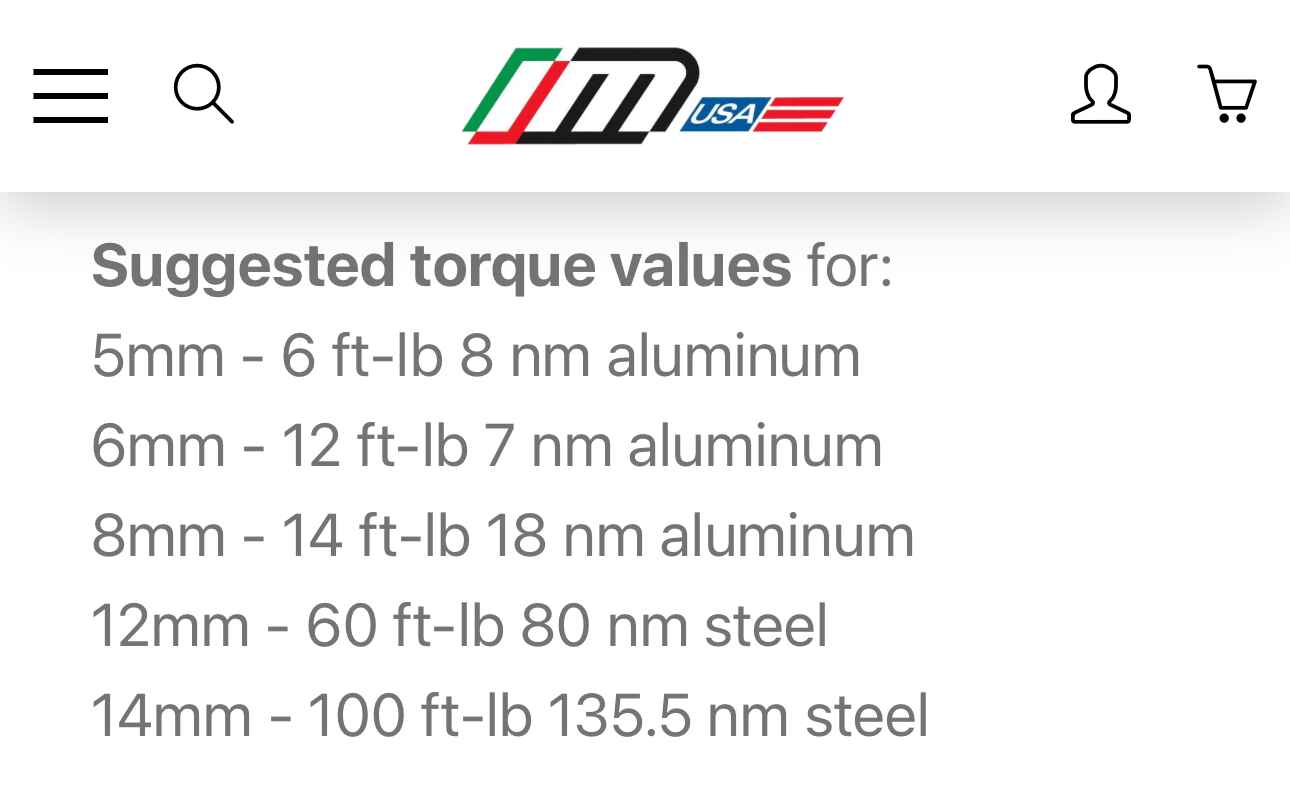
Noted. How much Nm do you set to fasten the cilinder and the head? This gives me more confidence of removing the cilinder as a whole instead of removing the head only or just look down the spark plug hole.
I’ve yet to break in the new piston (and new-to-me KZ R1 for that matter) so I’m ‘starting over’ when it comes to my setup book of jetting.
Thanks.
Good starting points. I actually went slightly less than this with the torque wrench. Then checked by hand just to get a feel for how much torque I had applied. I’ve pulled the engine apart a couple times now and just do it by hand. You will get a feel for mow much torque is enough. It’s just aluminum and if you use “softer” 8.8 bolts it doesn’t take much to get a proper amount of clamping force.
1 Like